
Period Calculator: When Is My Next Period?
Predict your next period, see your next 6 period dates, and find out which phase of your cycle you are in today.
Your next period
Today is cycle day
Estimated ovulation
Fertile days are around this date
| Period | Dates | Ovulation |
|---|
Predictions assume a regular cycle. A cycle anywhere from 21 to 35 days is normal for adults, and it can vary by a few days. If your periods are often more than 7 days late, very heavy or very painful, or you miss 3 in a row, see a gynaecologist. Irregular periods are common with PCOS; our PCOS diet plan can help.
Written by Dn. Aruba Rashid, certified dietitian (BS Human Nutrition and Dietetics). Updated October 2026.
How to Use the Period Calculator
Enter the first day of your last period, your average cycle length and how many days your period usually lasts. The calculator predicts your next period, lists your next 6 period dates, marks your fertile days on a calendar and tells you which phase of your cycle you are in today.
To find your cycle length, count the days from the first day of one period to the day before your next period starts. If it changes from month to month, use the average of your last 3 cycles.
What Is a Normal Menstrual Cycle?
Every woman’s cycle is a little different. For most adults these ranges are normal:
| Normal range | |
|---|---|
| Cycle length | 21 to 35 days (28 is the average) |
| Period length | 2 to 7 days |
| Blood loss | About 2 to 3 tablespoons over the whole period |
| Change from month to month | Up to 7 to 9 days |
In the first 2 to 3 years after periods start, cycles can be longer and less regular, from 21 to 45 days.
The 4 Phases of Your Cycle
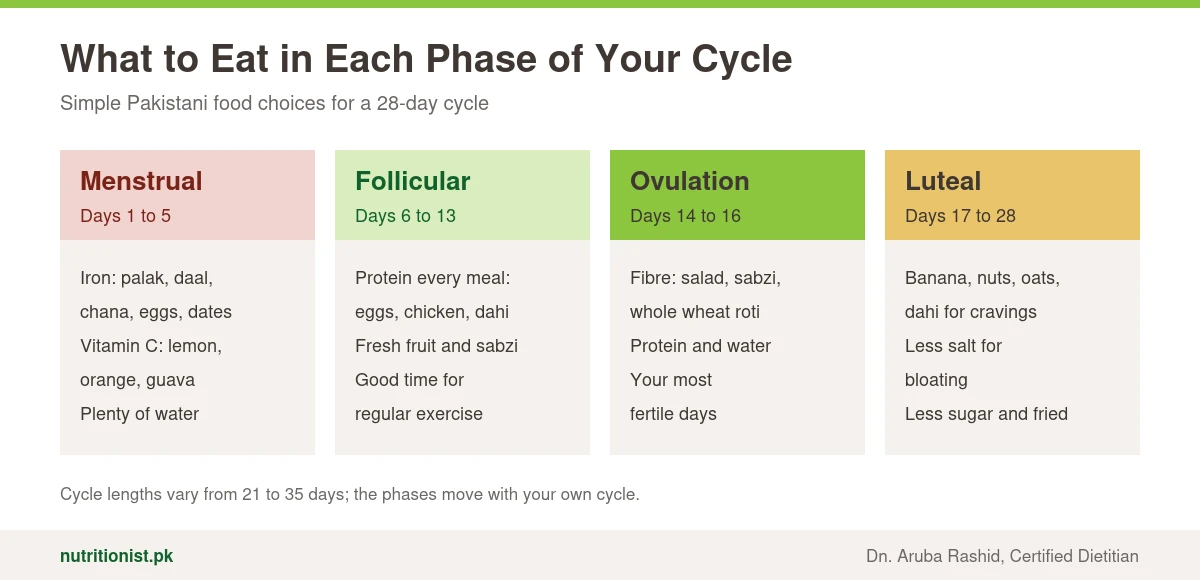
Your hormones change through the month, and so do your energy, hunger and cravings. Knowing your phase helps you plan your meals:
- Menstrual phase (period days): you lose iron with the blood. Eat iron-rich foods like palak, daal, chana, eggs, chicken and dates, with a fruit or lemon for vitamin C.
- Follicular phase (after your period until ovulation): energy usually rises. A good time for regular exercise and protein at every meal.
- Ovulation (around the middle of your cycle): your most fertile days. Keep meals balanced with fibre, protein and plenty of water.
- Luteal phase (after ovulation until your period): hunger, cravings and bloating often increase. Choose bananas, nuts, oats, dahi and whole wheat roti, and cut down on salt, sugar and fried snacks.
Why Is My Period Late?
A period that comes a few days early or late is usually nothing to worry about. Common reasons include:
- Pregnancy: if you could be pregnant, take a home test from the day your period is due.
- Stress from exams, work, travel or a family event.
- Weight changes: losing or gaining a lot of weight quickly, or eating far too little.
- PCOS: one of the most common causes of irregular periods in Pakistani women.
- Thyroid problems and some medicines.
- Breastfeeding and the months after delivery.
- Heavy exercise without enough food.
Want a Diet Plan Made Just for You?
General plans are a good start, but your body, routine and health are unique. Dn. Aruba Rashid, certified dietitian, can create a personal plan for you online, anywhere in Pakistan.
Diet for Irregular Periods and PCOS
If your periods are irregular because of PCOS or extra weight, food can help a lot. A diet that keeps blood sugar steady lowers insulin, which helps your hormones balance and your periods become more regular.
- Fill half your plate with sabzi and salad at lunch and dinner.
- Add protein to every meal: eggs, daal, chana, chicken, fish, dahi or paneer.
- Keep roti and rice to measured portions, and choose atta over maida.
- Cut out sugary drinks, mithai and bakery items as much as you can.
- Walk 30 minutes a day and add simple strength exercise.
For women who are overweight, losing just 5 to 10% of body weight often makes periods more regular. See our PCOS diet plan for a free 7-day Pakistani plan, or our weight loss diet plan for women.
When to See a Doctor
See a gynaecologist if:
- You miss 3 periods in a row and you are not pregnant.
- Your cycle is often shorter than 21 days or longer than 35 days.
- Your period lasts more than 7 days, or you soak a pad every 1 to 2 hours.
- You have severe pain that stops you from going to work or school.
- You bleed between periods or after intercourse.
Frequently Asked Questions
How accurate is a period calculator?
It is accurate for women with regular cycles. If your cycle changes by more than a week from month to month, treat the dates as a rough guide and track your periods for a few months to find your real average.
How do I calculate my next period date?
Add your cycle length to the first day of your last period. For example, if your period started on 5 October and your cycle is 28 days, your next period is due on 2 November. The calculator above does this for the next 6 months.
Is a 35 day cycle normal?
Yes. Any cycle from 21 to 35 days is normal for adults, as long as it is fairly regular for you.
Can food make my period come faster?
No food can reliably bring on a period. If your period is late, rule out pregnancy first. Regular meals, a healthy weight and less stress help your cycle stay regular.
Why do I crave sweets before my period?
Hormone changes in the luteal phase can increase hunger and sugar cravings. Have a fruit, a few dates, nuts or a glass of milk instead of mithai and biscuits, and do not skip meals.
Get a Diet Plan for Your Hormones
Dn. Aruba Rashid, a certified dietitian, creates personal diet plans for PCOS, irregular periods and weight loss for women. She sees women in person in Multan and offers video sessions for women and WhatsApp consultations across Pakistan. You can also use our ovulation calculator to find your fertile days.