Pregnancy Diet Plan: Trimester-Wise Pakistani Diet Chart for Pregnant Women
Every mother in Pakistan hears the same advice during pregnancy: “ab do logon ka khana khao” (now eat for two). Your body does need more nutrition, but not double the food. A good pregnancy diet plan gives you the right extra calories, plenty of protein, iron, calcium and folic acid, and simple meals that are easy to eat even on days when you feel sick. This guide shows you what to eat in each trimester, with a Pakistani diet chart you can follow at home.
Written by Dn. Aruba Rashid, certified dietitian (BS Human Nutrition and Dietetics). Updated October 2026.
Key takeaways
- Pregnancy is not eating for two: no extra calories in the first trimester.
- You need about 340 extra calories in the second trimester and about 450 in the third.
- Focus on iron, calcium, protein and the folic acid your doctor prescribes.
- Always boil khulla doodh, cook eggs and meat fully, and keep chai to 2 to 3 cups a day.
- Always follow your gynaecologist's advice, especially about medicines and supplements.
Every pregnancy is different. Always follow the advice of your gynaecologist, especially about medicines, supplements and any condition like diabetes, high blood pressure or anaemia.
How Much Should You Eat During Pregnancy?
In the first trimester you do not need extra calories at all. From the second trimester, a healthy woman carrying one baby needs only about 340 extra calories a day, and about 450 extra in the third trimester. That is roughly one extra healthy snack, not an extra meal.
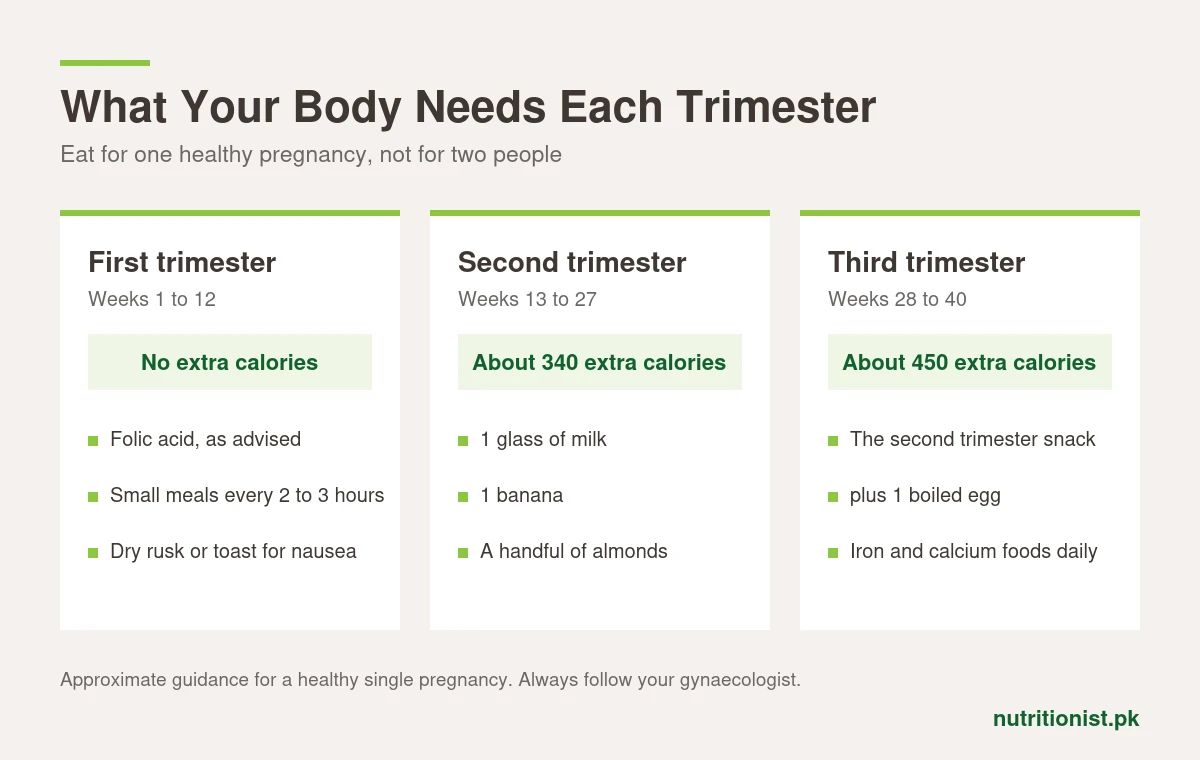
| Trimester | Extra calories a day | What that looks like |
|---|---|---|
| First (weeks 1 to 12) | None | Same meals, smaller and more often |
| Second (weeks 13 to 27) | About 340 | 1 glass of milk, 1 banana and a handful of almonds |
| Third (weeks 28 to 40) | About 450 | The same snack plus 1 boiled egg |
Women who were underweight before pregnancy, or who are carrying twins, may need more. Your doctor will track your weight gain at each visit.
Nutrients You Need Most in Pregnancy
- Folic acid: protects your baby’s brain and spine in the early weeks. Take the folic acid tablet your doctor prescribes, and eat palak, methi, daal, chana and oranges.
- Iron: anaemia is very common in Pakistani mothers. Eat red meat, chicken, eggs, daal, chana, palak and dates, with a lemon or a fruit for vitamin C. Avoid chai for an hour before and after iron-rich meals and iron tablets, because tea reduces iron absorption.
- Calcium: for your baby’s bones and to protect your own. Aim for 3 servings a day of milk, dahi, lassi or paneer.
- Protein: for your baby’s growth. Include eggs, chicken, fish, daal, chana, dahi or paneer at every main meal.
- Fibre and water: constipation is common. Eat sabzi, fruit and whole wheat roti, and drink 8 to 10 glasses of water a day.
Pregnancy Diet Chart: A Sample Day
This chart is for the second and third trimester. In the third trimester, add one boiled egg to the evening snack.
| Time | What to eat |
|---|---|
| Early morning | 1 glass of warm milk and 4 to 5 soaked almonds |
| Breakfast | 1 atta roti or 2 slices of brown bread, 1 egg (fully cooked), 1 cup chai with little sugar |
| Mid-morning | 1 fruit, such as an apple, orange, guava or banana |
| Lunch | 1 to 2 atta rotis, chicken or daal salan, sabzi, salad and a bowl of dahi |
| Evening | 1 glass of milk or lassi without sugar, 1 banana, a handful of nuts or roasted chana |
| Dinner | 1 roti or 1 cup rice, fish, chicken or lobia salan, and palak or mixed sabzi |
| Bedtime | Half a glass of milk, or 2 to 3 dates if you are hungry |
Want a Diet Plan Made Just for You?
General plans are a good start, but your body, routine and health are unique. Dn. Aruba Rashid, certified dietitian, can create a personal plan for you online, anywhere in Pakistan.
Diet Tips for Each Trimester
First trimester: managing nausea
Morning sickness makes it hard to eat. Keep a rusk, dry toast or a few plain biscuits next to your bed and eat one before you get up. Eat small meals every 2 to 3 hours instead of three big ones. Ginger tea, lemon water and cold foods like dahi or fruit are often easier to keep down. If you cannot keep any food or water down for a day, see your doctor.
Second trimester: building strength
Your appetite usually comes back now. This is the time to focus on iron, calcium and protein. Do not use the extra appetite for mithai, fried snacks and cold drinks, because too much weight gain makes the third trimester harder.
Third trimester: heartburn and swelling
As your baby grows, there is less space for your stomach. Eat smaller meals, avoid lying down straight after eating, and keep spicy and oily food light at dinner. Cut down on very salty foods like pickles, papad and namkeen if your feet swell, and tell your doctor about any sudden swelling.
Foods to Avoid or Limit in Pregnancy
- Raw or half-cooked eggs and meat: cook eggs until the yolk is firm, and cook meat and chicken all the way through.
- Unboiled milk: always boil khulla doodh before drinking it, or use packaged pasteurised milk.
- High-mercury fish: avoid shark, swordfish and king mackerel. Most other cooked fish is fine twice a week.
- Too much liver: liver has a lot of vitamin A, which is harmful in large amounts during pregnancy.
- Unripe or semi-ripe papaya: best avoided. Fully ripe papaya in small amounts is generally considered safe.
- Too much caffeine: keep it to about 2 to 3 cups of chai a day, or 1 to 2 small cups of coffee.
- Street food and cut fruit from carts: these carry a higher risk of food poisoning.
- Herbal remedies and “desi nuskhay”: do not take any herbal medicine or supplement without asking your doctor.
Common Pregnancy Food Myths in Pakistan
- “Eat a lot of desi ghee in the ninth month for an easy delivery.” There is no evidence that ghee makes labour easier. It only adds a lot of extra calories and fat.
- “Eating for two.” You need about one extra healthy snack a day in the second and third trimesters, not double portions.
- “Avoid all fruit that is ‘garam’.” Normal portions of fruits like mango, dates and pineapple are fine for most women. Eat a variety and keep portions sensible.
Pregnancy Diet with Diabetes, Anaemia or High Blood Pressure
If you have gestational diabetes, your plan needs controlled portions of roti and rice, no sugary drinks, and regular blood sugar checks as your doctor advises. Our diabetes diet chart explains the basics, but pregnancy needs a personal plan. For anaemia, focus on the iron foods above with your iron tablets. For high blood pressure, reduce salt and follow your doctor closely. Never stop or change any medicine on your own.
Want to know exactly which trimester you are in? Use our free pregnancy calculator to find your due date, weeks and the dates of your key scans.
Frequently Asked Questions
How much weight should I gain during pregnancy?
For a woman with a healthy weight before pregnancy, about 11 to 16 kg in total is normal. Women who were underweight may need to gain more, and women who were overweight usually need to gain less. Your doctor will guide you.
Can I fast in Ramadan while pregnant?
Many women can, but it depends on your health and stage of pregnancy. Speak to your gynaecologist before deciding, and break the fast if you feel dizzy, very weak or less baby movement.
Is it safe to eat eggs every day in pregnancy?
Yes, 1 to 2 fully cooked eggs a day are a great source of protein for most pregnant women.
Can I drink chai during pregnancy?
Yes, in moderation. Keep it to about 2 to 3 cups a day with little sugar, and avoid it around meals and iron tablets.
Get a Personal Pregnancy Diet Plan
Every pregnancy is different, and a plan built around your weight, trimester, reports and family food works best. Dn. Aruba Rashid sees women in person in Multan, and offers video sessions for women and WhatsApp consultations anywhere in Pakistan. She also creates plans for healthy weight after delivery.
About the Dietitian
Dn. Aruba Rashid is a certified dietitian and nutritionist with a BS in Human Nutrition and Dietetics from The University of Faisalabad and over 4 years of experience. She creates personalised diet plans for pregnancy, weight after delivery, PCOS, diabetes, weight loss and other health needs. She sees women in person in Multan and consults clients across Pakistan online. Message her on WhatsApp to book your consultation.