Body Type Calculator: Find Your Body Shape
Measure your bust (or chest), waist and hips to find your body shape, plus your waist-to-hip ratio and what it means for your health.
Your body shape
Waist-to-hip ratio
Waist-to-height ratio
Waist size
Every body shape can be healthy. Your shape mostly comes from your genes and bone structure, but where you store fat matters for health: fat around the waist raises the risk of diabetes, PCOS symptoms and heart disease. For a diet and exercise plan for your body, message Dn. Aruba Rashid on WhatsApp.
Written by Dn. Aruba Rashid, certified dietitian (BS Human Nutrition and Dietetics). Updated October 2026.
How to Measure Yourself
Use a soft measuring tape, wear light clothing or measure on bare skin, and keep the tape level all the way around.
- Bust or chest: around the fullest part of your bust, or for men, around the chest under the arms.
- Waist: for women, the narrowest part of your waist, usually above the navel. For men, around the navel.
- Hips: around the widest part of your hips and buttocks.
- Height (optional): to see your waist-to-height ratio. Use the same unit as your other measurements.
Stand relaxed, breathe out normally and do not pull the tape tight.
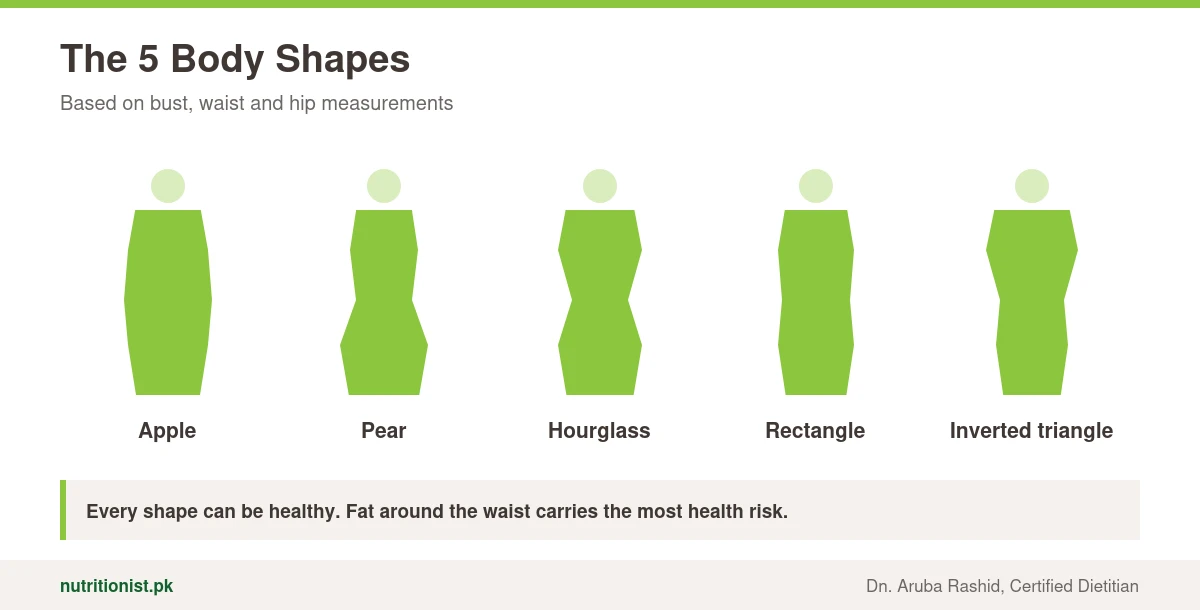
The 5 Body Shapes
| Body shape | What it looks like | Where weight usually goes |
|---|---|---|
| Apple (round) | Waist close to or bigger than bust and hips | Belly and upper body |
| Pear (triangle) | Hips wider than bust | Hips, thighs and bottom |
| Hourglass | Bust and hips similar, with a smaller waist | Evenly, top and bottom |
| Rectangle (straight) | Bust, waist and hips similar | Often the belly |
| Inverted triangle | Bust and shoulders wider than hips | Upper body and middle |
Men have the same basic shapes: the oval (apple), triangle, rectangle, balanced X-shape and V-shape (inverted triangle).
What Your Body Shape Means for Your Health
Your body shape mostly comes from your genes, bones and hormones, so no shape is better than another. But where you store fat matters. Fat around the waist, called visceral or belly fat, is more active and is linked to insulin resistance, type 2 diabetes, high blood pressure, heart disease and worse PCOS symptoms. Fat on the hips and thighs carries less risk.
That is why this calculator also shows two health numbers:
| Measure | Healthy | Higher risk |
|---|---|---|
| Waist-to-hip ratio (women) | 0.85 or less | Above 0.85 |
| Waist-to-hip ratio (men) | 0.90 or less | Above 0.90 |
| Waist-to-height ratio | Below 0.5 | 0.5 or more |
| Waist size, South Asian women | Below 80 cm (31.5 in) | 80 cm or more |
| Waist size, South Asian men | Below 90 cm (35.4 in) | 90 cm or more |
South Asians develop diabetes and heart disease at smaller waist sizes than Europeans, which is why the waist limits above are lower than the ones you may see on foreign websites.
Want a Diet Plan Made Just for You?
General plans are a good start, but your body, routine and health are unique. Dn. Aruba Rashid, certified dietitian, can create a personal plan for you online, anywhere in Pakistan.
Diet and Exercise Tips for Each Shape
- Apple: cut sugar, cold drinks, maida and fried snacks, eat protein and fibre at every meal, walk daily and add strength exercise. Ask your doctor to check your blood sugar and blood pressure. Our PCOS diet plan and diabetes diet chart use the same low-sugar approach.
- Pear: do full-body strength training with extra upper body work, and lose fat slowly with a small calorie deficit instead of crash diets.
- Hourglass: keep your waist in check with daily walking, strength exercise and enough protein, especially after age 35.
- Rectangle: strength training and enough protein build shape. Watch your waist, as extra weight often goes to the belly.
- Inverted triangle: add lower body exercise like squats and lunges, and keep an eye on your waist size.
You cannot lose fat from one spot only. A calorie deficit, enough protein, strength training and walking reduce fat all over, including the belly. Check your body fat with our body fat calculator and your daily calories with the TDEE calculator.
Frequently Asked Questions
What is the most common body shape in Pakistani women?
There is no reliable national data, but pear and apple shapes are both very common. South Asian women also tend to store more fat around the waist at a lower weight, so it is worth checking your waist size even if your BMI is normal.
Can I change my body shape?
You cannot change your bone structure, but you can change how much fat you carry and where your muscle is. Losing belly fat and building muscle with strength training can change your measurements and how your clothes fit.
What is a healthy waist-to-hip ratio for women?
A waist-to-hip ratio of 0.85 or less is considered healthy for women, and 0.90 or less for men.
Is the apple shape unhealthy?
Not by itself, but carrying fat around the belly raises the risk of diabetes, high blood pressure and heart disease. If you have an apple shape, it is a good idea to check your waist size, blood sugar and blood pressure regularly.
How often should I measure myself?
Every 2 to 4 weeks is enough. Measure at the same time of day, in the same place on your body, to track real changes.
Get a Plan Made for Your Body
Dn. Aruba Rashid, a certified dietitian, creates personal diet plans for weight loss, belly fat, PCOS and healthy weight gain, built around Pakistani food and your body shape. She sees women in person in Multan, and offers video sessions for women and WhatsApp consultations anywhere in Pakistan.