Ramadan Diet Plan for Weight Loss: Healthy Sehri and Iftar Plan for Pakistanis
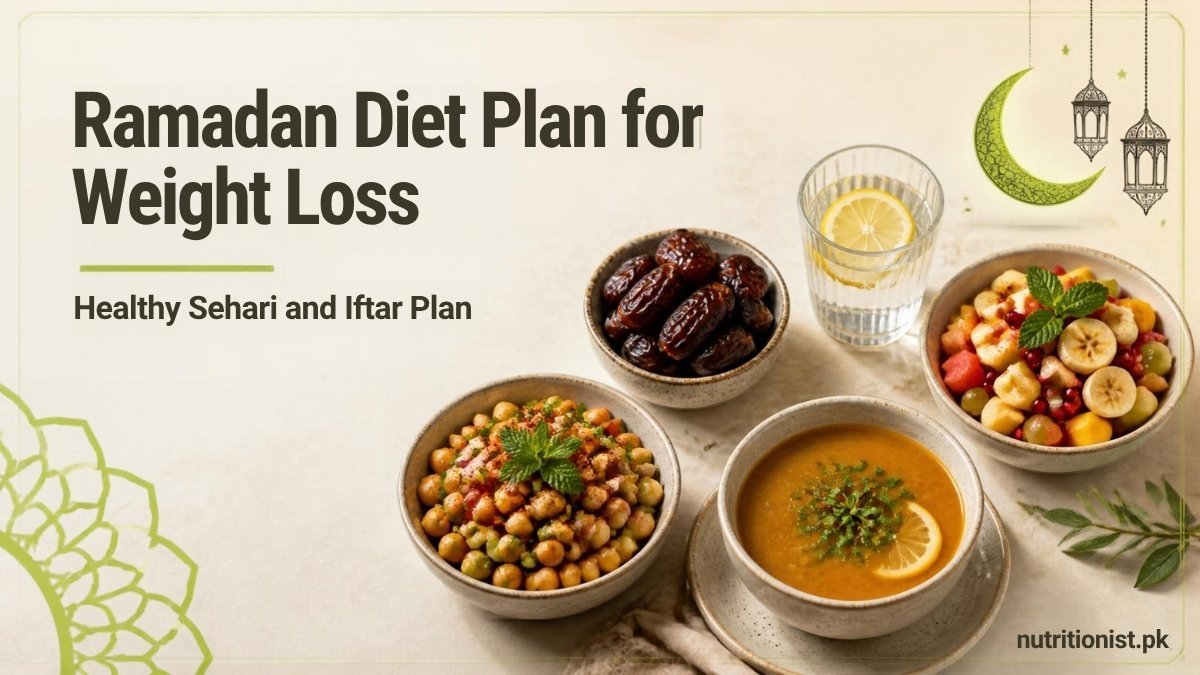
Ramadan should be a month of ibadat, not a month of weight gain. Yet many people in Pakistan finish Ramadan heavier than they started, because of fried iftar, sugary sharbat, a heavy dinner and very little sleep. With a little planning, Ramadan can be the easiest month of the year to lose weight, since your eating window is already shorter. This Ramadan diet plan for weight loss shows you what to eat at sehri and iftar, how to stay hydrated, and a 7-day plan with normal Pakistani food. Use the free calculator below to find your own sehri and iftar calories.
Written by Dn. Aruba Rashid, certified dietitian (BS Human Nutrition and Dietetics). Updated October 2026.
Key takeaways
- Never skip sehri: eggs, atta roti or oats, dahi and a fruit keep you full for longer.
- Open your fast with 2 dates and water, pray Maghrib, then eat a light dinner.
- Keep fried iftar food to 2 to 3 pakoras or one samosa, and swap sweet sharbat for water.
- Drink 8 glasses of water between iftar and sehri, spread through the night.
- If you have diabetes, are pregnant or take regular medicines, speak to your doctor before fasting.
Can You Lose Weight in Ramadan?
Yes. If you eat a balanced sehri, open your fast with dates and water, and keep iftar and dinner moderate, most people can lose 1 to 3 kg during Ramadan without feeling weak. The weight gain usually comes from what happens after Maghrib: plates of pakoras, samosas and jalebi, sweet drinks, and then a full dinner on top.
Fasting is not suitable for everyone. If you have diabetes, kidney disease, are pregnant or breastfeeding, or take regular medicines, speak to your doctor before Ramadan about whether and how to fast safely.
Ramadan Calorie and Water Calculator
Find out how much to eat at sehri and iftar, how much water to drink, and how much weight you could lose this Ramadan.
Daily calories
Water between iftar and sehri
Protein a day
| Meal | Calories | Example |
|---|
Estimates for healthy adults. If you have diabetes, are pregnant or breastfeeding, or take regular medicines, speak to your doctor before fasting. For a plan made for you, message Dn. Aruba Rashid on WhatsApp.
What to Eat at Sehri
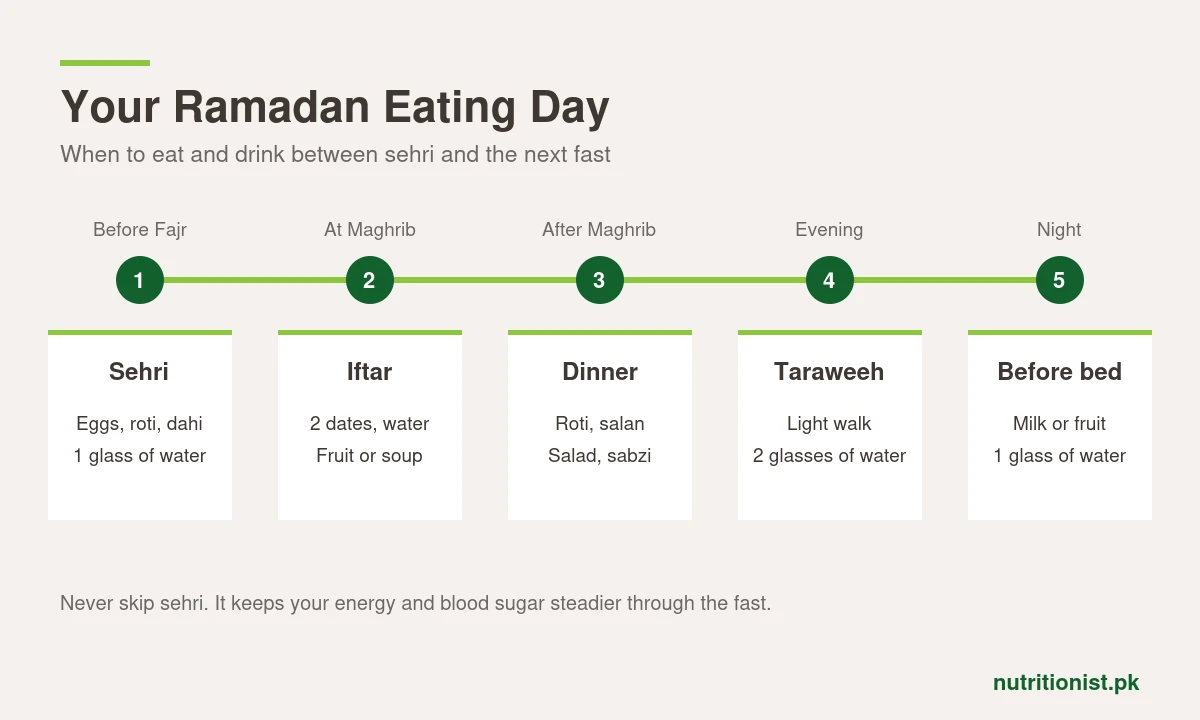
Sehri is the most important meal in Ramadan. It needs to keep you full and steady for 13 to 15 hours, so choose slow-digesting carbs, protein and fibre:
- Protein: 2 eggs, a bowl of dahi, or leftover chicken or daal salan.
- Slow carbs: 1 atta roti, oats or daliya, instead of white bread or a fried paratha.
- Fibre: a fruit like a banana or an apple, or some cucumber and tomato.
- Fluids: 1 to 2 glasses of water and a glass of milk or lassi without sugar.
Avoid very salty and spicy food at sehri, such as pickles, salty paratha and fried keema, because salt makes you thirsty during the fast. Keep chai to one cup, and eat sehri as close to Fajr as you can.
What to Eat at Iftar
Open your fast the Sunnah way, with 2 dates and water. Dates give quick energy and water rehydrates you. Then follow these steps:
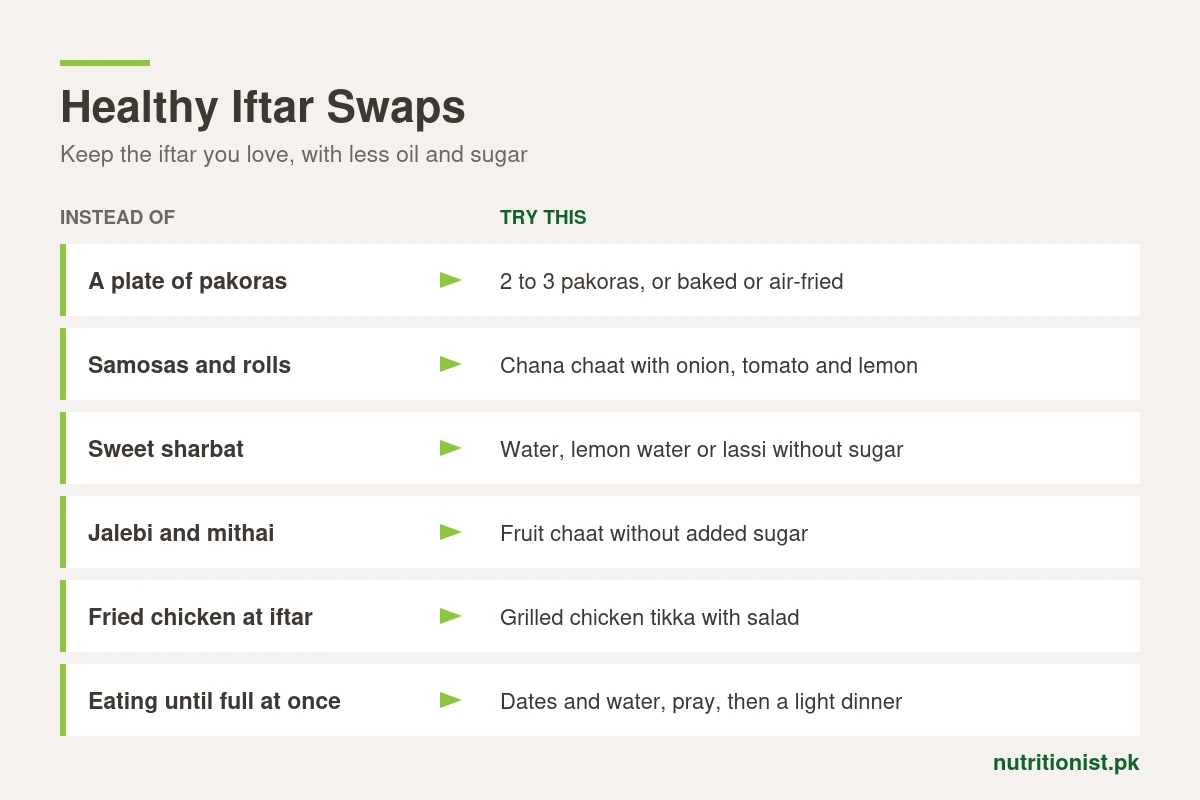
- Start light: after dates and water, have a bowl of fruit chaat without added sugar, a bowl of soup or a little chana chaat.
- Pause for Maghrib: praying before your main meal gives your stomach time to signal that it is full.
- Keep fried food small: 2 to 3 pakoras or one samosa is enough if you want them. Baked or air-fried versions are better.
- Light dinner: 1 roti with chicken, daal or sabzi salan, and a plate of salad.
7-Day Ramadan Diet Plan for Weight Loss
This plan gives about 1,500 to 1,800 calories a day for most adults. If you are very active or feel weak, add one roti at dinner or a fruit at sehri.
| Day | Sehri | Iftar | Dinner |
|---|---|---|---|
| Day 1 | 2 boiled eggs, 1 atta roti, dahi, 1 banana | 2 dates, water, fruit chaat | Chicken salan, 1 roti, salad |
| Day 2 | Oats with milk, a few almonds, 1 apple | 2 dates, water, chana chaat | Daal, 1 roti, kheera raita |
| Day 3 | Omelette with vegetables, 1 roti, lassi without sugar | 2 dates, water, vegetable soup | Grilled fish or chicken tikka, salad |
| Day 4 | Daliya with milk, 1 boiled egg | 2 dates, water, 2 pakoras, fruit | Mixed sabzi, 1 roti, dahi |
| Day 5 | Chicken salan (leftover), 1 roti, dahi | 2 dates, water, fruit chaat | Lobia or chana salan, half cup rice, salad |
| Day 6 | 2 eggs, brown bread, 1 banana | 2 dates, water, dahi baray (1 to 2) | Palak chicken, 1 roti |
| Day 7 | Paratha with egg as a weekly treat, dahi | 2 dates, water, 1 samosa, fruit | Light: soup and chicken sandwich on brown bread |
Want a Diet Plan Made Just for You?
General plans are a good start, but your body, routine and health are unique. Dn. Aruba Rashid, certified dietitian, can create a personal plan for you online, anywhere in Pakistan.
How to Stay Hydrated in Ramadan
Dehydration causes most of the headaches, tiredness and constipation people feel while fasting. Aim for 8 glasses of water between iftar and sehri, spread through the night instead of drinking it all at once.
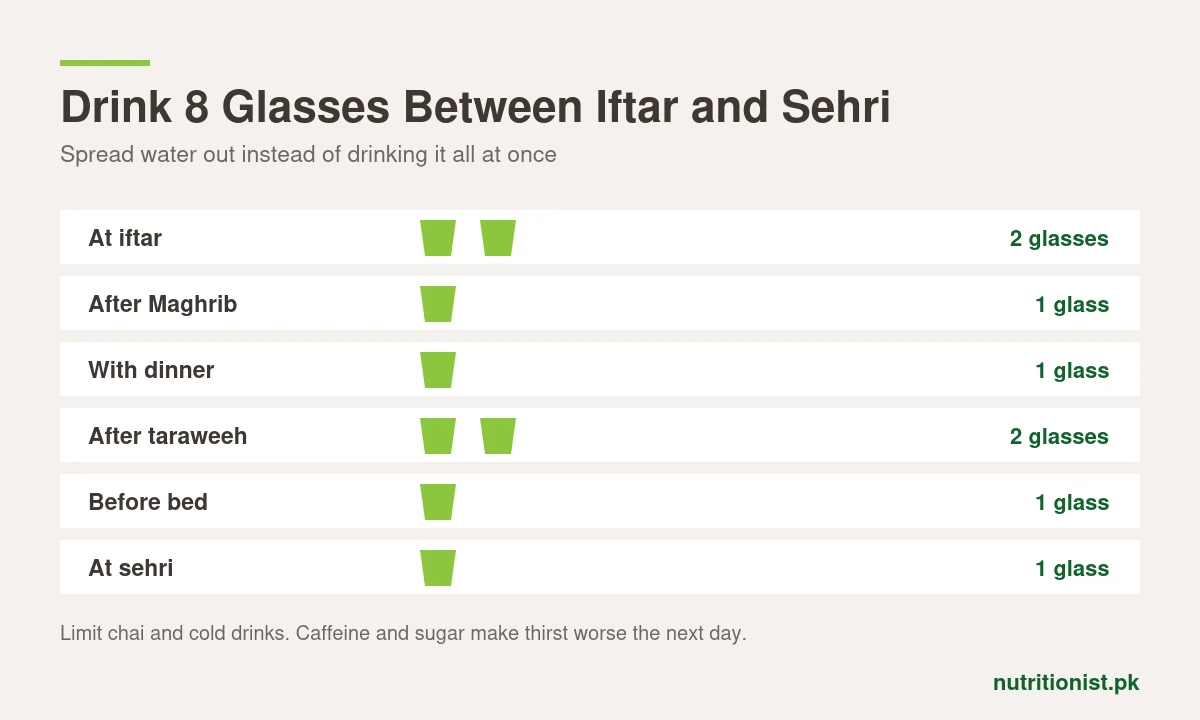
Water-rich foods also help: cucumber, tomato, watermelon, oranges, dahi and soup. Cut down on chai, coffee and cold drinks, because caffeine and sugar make you thirstier the next day.
Exercise During Ramadan
You do not need to stop exercising in Ramadan, but keep it light. A 20 to 30 minute walk after iftar or after taraweeh is ideal. If you go to the gym, train an hour or two after iftar, not while fasting in the afternoon heat. Taraweeh itself is gentle movement too.
Fasting with Diabetes, Pregnancy or Other Conditions
- Diabetes: fasting can cause dangerous low or high blood sugar, especially with insulin or some tablets. See your doctor before Ramadan to adjust your medicine timings. Check your sugar during the fast, and break the fast if it falls below 70 mg/dL or rises above 300 mg/dL, or if you feel shaky, sweaty or confused. Our diabetes diet chart explains which foods keep sugar steadier.
- Pregnancy and breastfeeding: many women are exempt from fasting. Decide with your gynaecologist, and read our pregnancy diet plan for what to eat.
- High blood pressure and kidney disease: ask your doctor first, and keep salt low at both meals.
Never stop or change a medicine on your own to fast.
5 Common Ramadan Diet Mistakes
- Skipping sehri: this makes you hungrier at iftar and more likely to overeat.
- Overeating at iftar: eating a full meal at once causes bloating, acidity and weight gain.
- Too much fried food: pakoras, samosas and rolls every day add hundreds of calories.
- Sugary drinks: sweet sharbat and cold drinks add sugar without filling you up.
- Sleeping straight after sehri or iftar: wait at least 30 minutes after eating before lying down to avoid heartburn.
Frequently Asked Questions
Is it okay to skip sehri in Ramadan?
It is better not to. Skipping sehri makes the fast harder, lowers your energy and usually leads to overeating at iftar. Even a small sehri of 2 eggs, a roti and a glass of water helps.
How many dates should I eat at iftar?
2 to 3 dates are enough to open your fast. Dates are healthy but high in natural sugar, so eating a whole plate adds a lot of calories.
Can I drink chai during Ramadan?
Yes, in moderation. Keep it to one cup at sehri and one after iftar, with little sugar. Too much chai can make you more thirsty during the fast.
Why do I get headaches while fasting?
The most common reasons are not drinking enough water, missing your usual chai or coffee, and low blood sugar. Drink 8 glasses of water between iftar and sehri, and cut down on chai a week before Ramadan.
Can people with diabetes fast in Ramadan?
Some people with diabetes can fast safely after speaking to their doctor, but others should not. Your doctor may change the timing or dose of your medicine. Break the fast if your sugar falls below 70 mg/dL or rises above 300 mg/dL.
How do I keep the weight off after Ramadan?
Go back to three balanced meals a day, keep the healthy sehri and iftar habits you built, and avoid overeating sweets during Eid. Keep walking daily.
Get a Personal Ramadan Diet Plan
A plan built around your health, medicines, work hours and family’s iftar works much better than a general chart. Dn. Aruba Rashid creates Ramadan diet plans for weight loss, diabetes, PCOS and healthy fasting. She sees women in person in Multan and consults clients online across Pakistan. You can also check your daily needs with our free calorie calculator before Ramadan starts.
About the Dietitian
Dn. Aruba Rashid is a certified dietitian and nutritionist with a BS in Human Nutrition and Dietetics from The University of Faisalabad and over 4 years of experience. She creates personalised diet plans for weight loss, diabetes, PCOS, pregnancy and healthy fasting, for clients across Pakistan through online consultations, and sees women in person in Multan. Message her on WhatsApp to book your consultation.