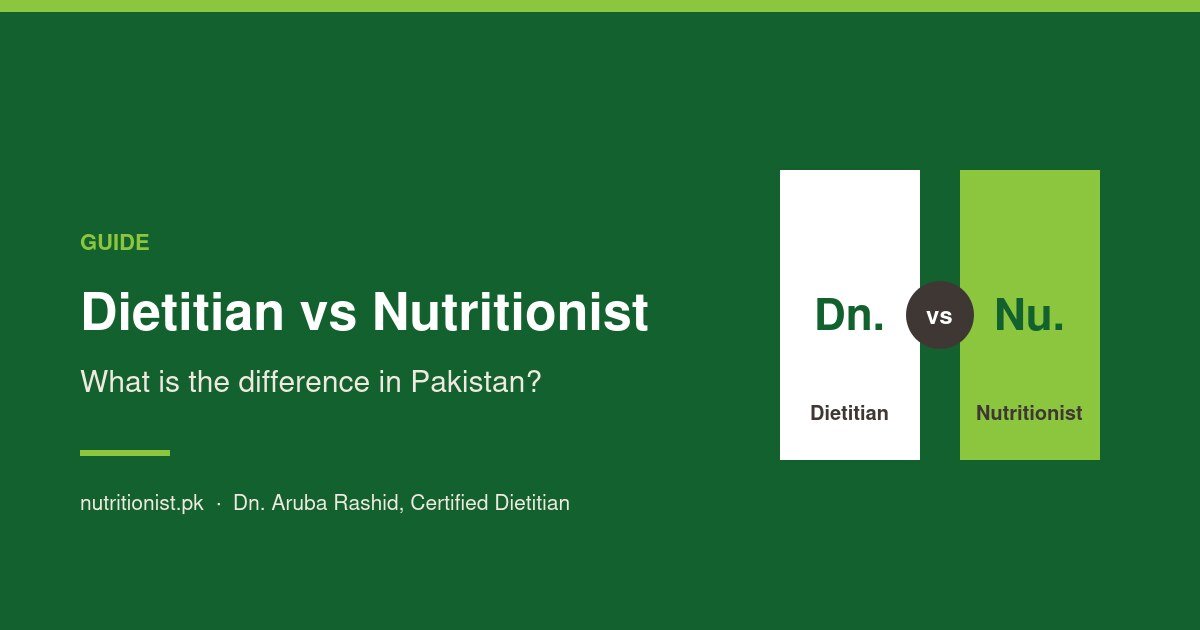
Dietitian vs Nutritionist: What Is the Difference in Pakistan?
In Pakistan, the words dietitian and nutritionist are often used as if they mean the same thing. Anyone can call themselves a “diet expert” on Instagram, and many people only find out after weeks of crash dieting that the person advising them had no real training. So what is the difference between a dietitian and a nutritionist, and which one should you see? This guide explains it in plain language, with a side-by-side comparison, the warning signs of bad diet advice, and how to choose the right expert for you.
Written by Dn. Aruba Rashid, certified dietitian (BS Human Nutrition and Dietetics). Updated October 2026.
Key takeaways
- A dietitian has a degree in human nutrition and dietetics plus supervised clinical training.
- “Nutritionist” is a broader title: training ranges from a full degree to a short course or none.
- For diabetes, PCOS, kidney disease, pregnancy or any medical condition, see a qualified dietitian.
- Pakistan’s Allied Health Professionals Council now registers allied health professionals, including the nutrition field.
- Avoid anyone who promises very fast weight loss, sells pills or teas, or tells you to stop medicines.
The Quick Answer
A dietitian is a nutrition professional with a degree in human nutrition and dietetics and supervised clinical training, who is qualified to plan diets for medical conditions like diabetes, kidney disease, PCOS and pregnancy. A nutritionist is a broader term. Some nutritionists have the same strong education, while others have only a short course or no formal training at all.
In simple words: every qualified dietitian is a nutrition expert, but not every person who calls themselves a nutritionist is a qualified dietitian.
What Is a Dietitian?
In Pakistan, a dietitian usually has a 4-year BS in Human Nutrition and Dietetics or a similar degree from an HEC-recognised university, followed by an internship in a hospital or clinic. During training, dietitians study:
- Human physiology, biochemistry and how the body uses food.
- Medical nutrition therapy for diabetes, heart disease, kidney and liver disease, cancer and digestive problems.
- Nutrition in pregnancy, childhood and old age.
- How to read lab reports and adjust diets around medicines.
- Counselling skills to help people change habits.
Dietitians work in hospitals, clinics, schools, sports teams, the food industry and private practice. Many dietitians in Pakistan use the title Dn. before their name, short for dietitian.
What Is a Nutritionist?
“Nutritionist” is a general title. A qualified nutritionist may hold a degree in nutrition, food science or public health and work in research, community nutrition programmes, food companies or wellness. These professionals are often excellent for general healthy eating advice.
The problem is that the title is also used by people with no proper training, such as gym trainers, social media influencers and sellers of diet pills or slimming teas. That is why it is important to ask about qualifications, not just the title.
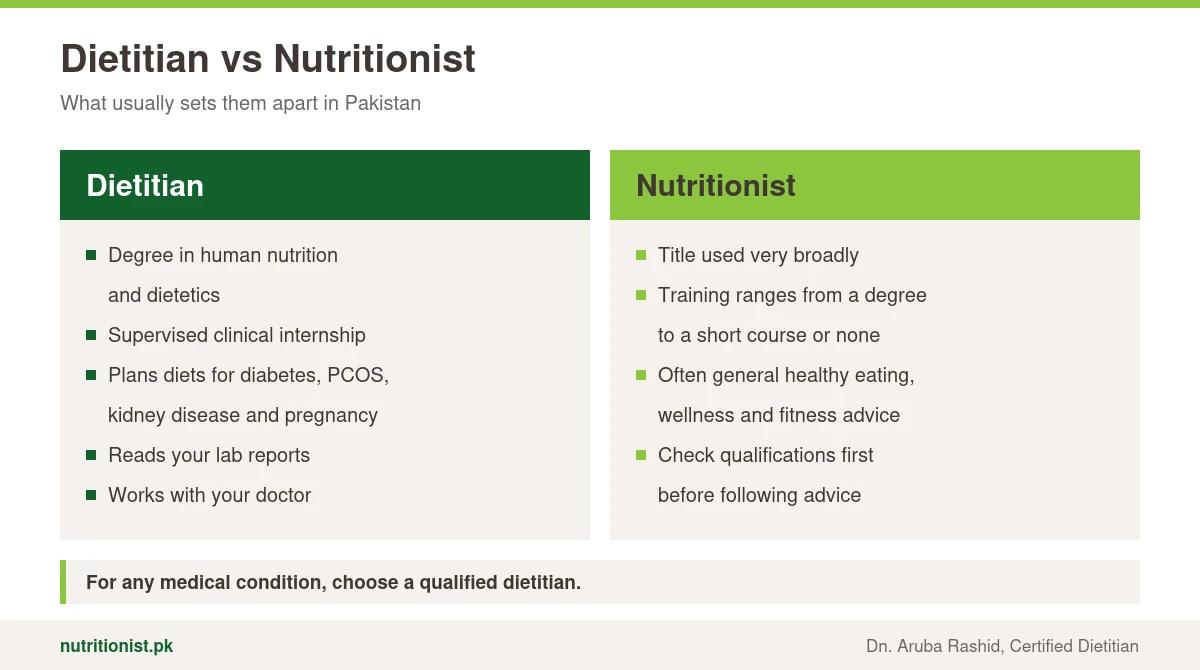
Dietitian vs Nutritionist: Side-by-Side
| Dietitian | Nutritionist | |
|---|---|---|
| Education | Degree in human nutrition and dietetics | Varies: from a degree to a short course or none |
| Clinical training | Supervised hospital or clinic internship | Not always |
| Diets for medical conditions | Yes: diabetes, PCOS, kidney, heart, pregnancy | Usually general healthy eating |
| Reads lab reports | Yes, as part of planning | Not always |
| Where they work | Hospitals, clinics, private practice | Wellness, community, food industry, online |
| Best for | Weight loss with health issues, any medical condition | General healthy eating and fitness |
Are Dietitians Regulated in Pakistan?
Pakistan is moving towards regulating nutrition professionals. The Allied Health Professionals Council (AHPC) registers allied health professionals, including those working in nutrition, and a 2026 government directive made registration compulsory for allied health professionals by a set deadline (source). Rules are still being put into practice, so it is reasonable to ask any nutrition expert about their degree, where they trained and whether they are registered.
When Should You See a Dietitian?
Generic diet charts from the internet are fine for some healthy people, but you should see a qualified dietitian if you:
- Have diabetes, prediabetes or gestational diabetes.
- Have PCOS, thyroid problems or irregular periods.
- Are pregnant, breastfeeding or planning a pregnancy.
- Have high blood pressure, high cholesterol, fatty liver or heart disease.
- Have kidney disease or a low eGFR on your reports.
- Need to lose or gain a lot of weight, or have tried many diets without success.
- Have digestive problems like IBS, acidity or food intolerances.
- Are planning a diet for a child, an elderly parent or someone recovering from illness.
Want a Diet Plan Made Just for You?
General plans are a good start, but your body, routine and health are unique. Dn. Aruba Rashid, certified dietitian, can create a personal plan for you online, anywhere in Pakistan.
How to Choose the Right Expert
Before you pay for a diet plan, ask these questions:
- What is your degree, and where did you study? Look for human nutrition and dietetics or a closely related degree.
- Have you worked in a hospital or clinic? Clinical experience matters for medical conditions.
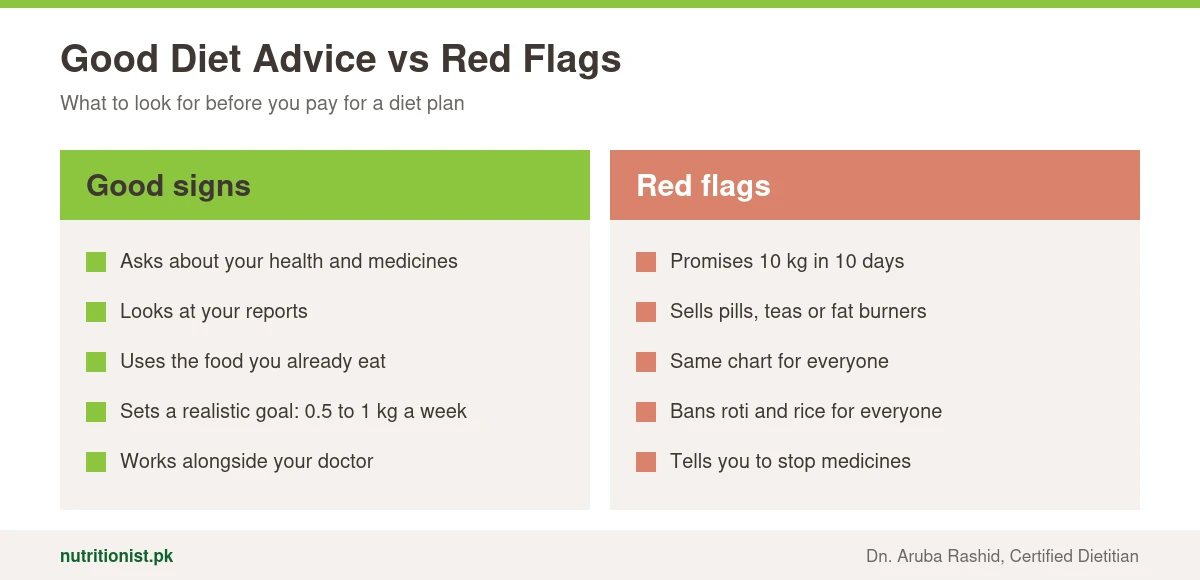
- Will you ask about my health, reports and medicines? A good plan starts with your history, not a ready-made chart.
- Will the plan use the food I already eat? In Pakistan, that means roti, daal, sabzi and family meals, not imported diet products.
Red flags to watch for
- Promises like “lose 10 kg in 10 days”.
- Selling pills, powders, slimming teas or “fat burner” capsules.
- The same diet chart for everyone.
- Banning whole food groups like roti or rice for everyone, forever.
- No questions about your medical history or medicines.
- Telling you to stop or change medicines.
What to Expect from a Dietitian Consultation
A good first consultation usually includes:
- Questions about your health, medicines, routine, sleep, activity and the food your family cooks.
- Measurements like weight, height, BMI and waist size, and a look at any recent reports.
- A clear goal, such as losing 0.5 kg a week, lowering HbA1c or making periods more regular.
- A personal diet plan with portions, built around food you can actually eat at home.
Before your appointment, you can check your numbers with our free BMI calculator, TDEE calculator and body type calculator.
Frequently Asked Questions
Is a dietitian better than a nutritionist?
For medical conditions, a qualified dietitian is the safer choice because of their clinical training. For general healthy eating, a qualified nutritionist can also give good advice. In both cases, check their qualifications.
Can a dietitian prescribe medicines?
No. Dietitians plan diets and work alongside your doctor. They should never tell you to stop or change your medicines on your own.
Do I need a dietitian to lose weight?
Not always, but a dietitian helps if you have a health condition, have struggled with many diets, or want a plan built around your own food and routine. You can start with our calorie deficit diet plan.
What does Dn. mean before a name?
Many dietitians in Pakistan use Dn. as a short form of dietitian, in the same way doctors use Dr.
Can I consult a dietitian online in Pakistan?
Yes. Online consultations on WhatsApp chat, voice or video calls work well for most diet plans, including weight loss, PCOS and diabetes, as long as you share your reports and measurements honestly.
About Dn. Aruba Rashid
Dn. Aruba Rashid is a certified dietitian with a BS in Human Nutrition and Dietetics from The University of Faisalabad. She creates personal diet plans for weight loss, weight gain, PCOS, diabetes and pregnancy using normal Pakistani food. She consults online across Pakistan through WhatsApp chat and voice calls, offers video sessions for women, and sees women in person in Multan. Read more about Dn. Aruba.